Mahjong Madness
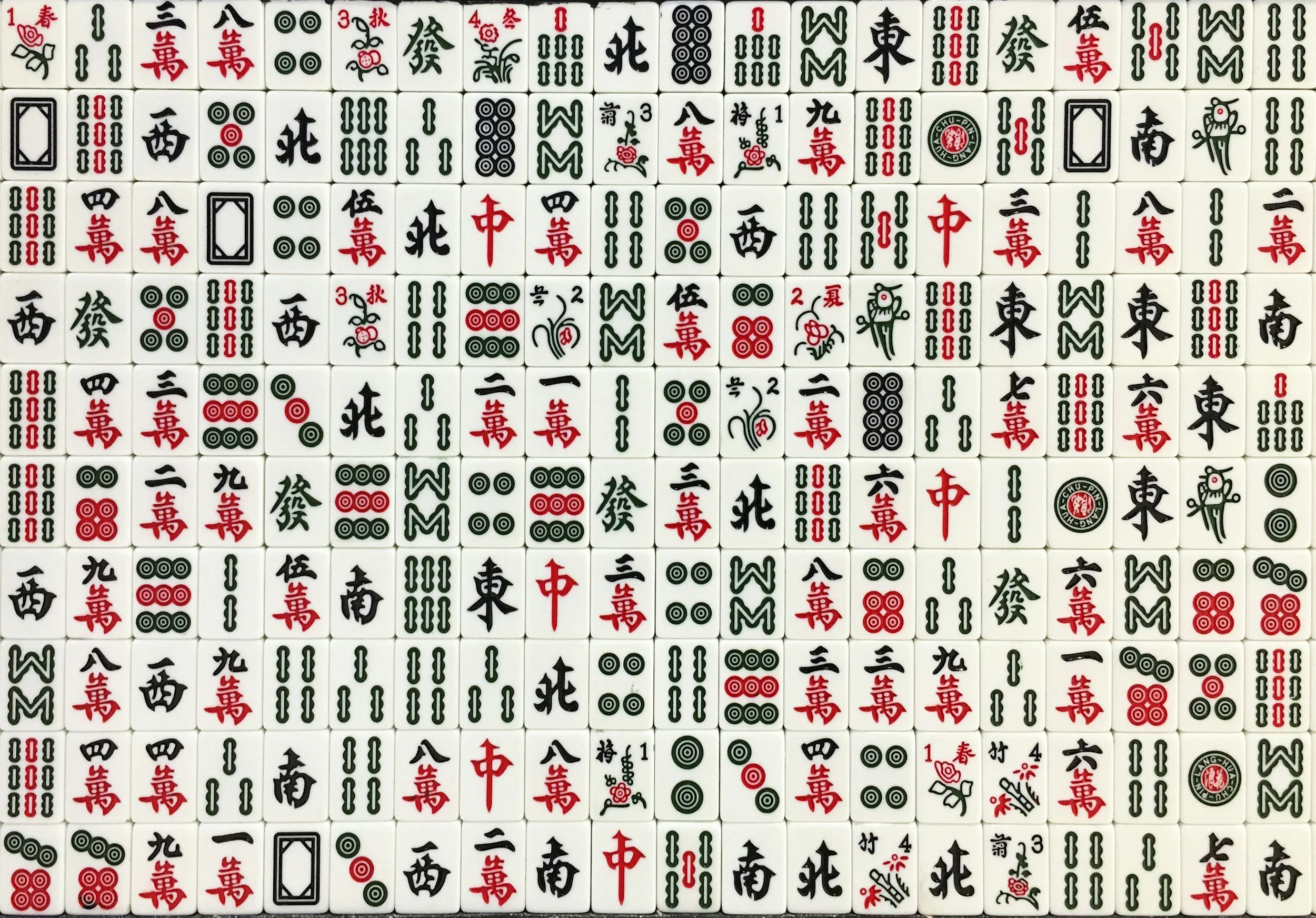
Is it just me, or is everyone talking Mahjong these days? Whether in newspaper articles, online buzz, or social media, groups are learning and playing in living rooms and clubhouses across the country. Mahjong is having a moment. On a personal note, Mahjong and I had a moment several years ago, and unfortunately for me, it was not a good one. More on that later.
Contrary to popular opinion, the game has relatively modern origins in Shanghai in the late 1800s and was brought to the United States by an American businessman in the early 1920s. A decade later, Jewish American housewives, eager to socialize, assimilate, and build communities, adopted the game. And there it has remained, an important part of the culture for the past one hundred years. A love of the game and Mahjong sets have been passed down from mother to daughter ever since.
As its popularity grew, consistent guidelines were needed. In response, a group of New York women founded The National Mah Jongg League (NMJL) to standardize the rules of play. According to the Jewish Museum Milwaukee, the League issued its first official scorecard in 1937. It contained rules and numerous combinations to try for winning hands, thereby establishing American Mahjong. Every spring, the League publishes a card with new combinations. This is the same card that guides the game today.
No matter how it’s spelled, Mah Jongg or Mahjong is a simple game, said no one ever. Learning to play is a complicated, challenging, and vexing endeavor. Many are hooked once they have mastered the basics. I would not know, as the more I played, the more confused I became. I speak from experience, having been humbled at a table of seasoned pros with whom I sat down to play one sad afternoon. Mine is a cautionary tale which tells an important, but unspoken rule of Mahjong. Know your place and find your people, because learning is a process. Find players with patience and good hearts who are willing to guide a beginner. Oftentimes, new players find it easier to start with others who are also learning the game.
Mahjong is played with 152 exquisitely decorated tiles. There are three sets of suits that reflect aspects of Chinese culture. The bam represents bamboo, craks are Chinese characters and a dot signifies a coin. Each is numbered one through nine. Green, red, and white dragons correspond to them; green with bams, red with craks, and white or soap, because it resembles a bar, goes with dots. The rest are called Honor tiles; the winds-North, South, East, and West, and flowers-two tiles for each season, and finally the jokers. It is important to recognize the tiles by name, as it is required to clearly and correctly call them out when discarding. “ONE BAM,” “TWO CRAK,” is commonly heard during any Mahjong game.
The objective is to complete a Mahjong by successfully matching your tiles to a winning combination from the card. But you must understand the rules, procedures, and rituals that are completed before and throughout the game. For example, prior to starting, players engage in the Charleston, a series of tile exchanges. This routine has its own set of guidelines to follow.
Mahjong requires skill, strategic knowledge, and a bit of good luck. Given the level of difficulty, what keeps everyone coming back to play? And what circumstances brought so many new players to the game in recent years?
After watching the pivotal Mahjong scene from Crazy Rich Asians, I became interested. The allure of the tactile and sensory clacking of the smooth tiles as they were mixed, arranged, and discarded throughout play appealed to me. Was it the promise of friendship and community while engaging in a skillful game that attracted some? Maybe it was the isolation of COVID lockdowns that drew others to seek companionship and a challenge. Perhaps many were looking to replace endless screen scrolling with more personal connections through interactive activities. If grandma games such as knitting, canasta, and jigsaw puzzles could experience a resurgence, then why not Mahjong?
Recently, researchers may have given us another reason to play. Though studies are inconclusive, there is a lot going on in the brain when playing Mahjong. And all that thinking and decision-making might contribute to our mental and cognitive health.
Although the official League card still resembles a nuclear code to me, I am giving Mahjong another moment of my time. A kind and proficient player friend offered to practice with me which is the key to success. Also, experts suggest reading American Mah Jongg for Beginners by Noah Pierce (Amazon), watching YouTube videos by Michelle Frizzel, and playing Real Mahjong ($6 per month.) Now that I am more confident, I am hooked. Mahjong anyone?
Do you play Mahjong or are you interested in learning the game? Please share your Mahjong moments in the comments below.
Bit by bit, that’s all she wrote…