Kintsugi
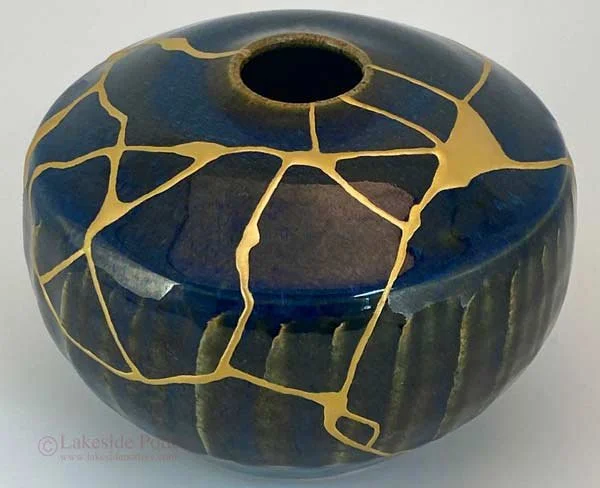
Kintsugi (kin-tsu-gi) is a compelling and interesting art form from Japan. The process repairs broken pottery with lacquer mixed with powdered gold, silver, or platinum. The pieces truly turn out more beautiful than they were originally. By highlighting the cracks, the pot's history is emphasized, revealed, not hidden. These are important concepts brought forth in the mending of broken pieces. Another Japanese word related to Kintsugi is Kintsukuroi (keen-tsoo-koo-ROY). It means golden repair and focuses on the actual restoration. Kintsukuroi stems from the belief that the process of fixing or healing is as important as the repair itself.
Then there is Wabi-Sabi, the aesthetic philosophy that appreciates the beauty of things that are flawed, impermanent, and asymmetrical. The principles of simplicity, grace, and naturalness add to the value of beauty in nature and humanity. Just like in our stories, that might not be perfect, we can grow through the golden repair of Kintsukuroi, even if it’s not so graceful or simple.
I know a beautiful person who has spent the last few years restoring her life in a way much like Kintsukuroi. Now she is even more graceful, strong, and confident, like a piece of Kintsugi pottery. The lines of golden strength wrap her in a light and strength that weren’t visible before. It’s quite enchanting to behold.
It is a lovely approach to our human brokenness, to have the grace and divine intervention to ‘put right’ our lives and situations with gold and silver. Putting together our broken, chipped pieces with the strength and respect, like using lacquer and gold flakes, could lead to a more beautiful self-image. After all, our hard times, shattered dreams, and failings make up who we are, and should not be hidden in shame but repaired gently and carefully. We gather the pieces and repair ourselves with resplendent clemency. With forgiveness and acknowledgement of shortcomings, we can begin the Kintsukuroi process for ourselves and others.
This credo helps us realize it is not about being broken; it is about our history, including our mistakes and past experiences, as we strive to become our whole person. A wholeness that sees the beauty in the light and connection within the gleaming cracks of who we are becoming. Opening up to the natural processes of aging and life can strengthen us and make us more resilient as we move along our journey, helping us focus on the greater value of our lives. So, after the mending, we can see our beauty and be open to the silver linings in others.
There is a strong connection between the Eastern philosophy, Kintsukuroi, and many religions. The mercy and compassion of Christianity resonate strongly with the repair of brokenness in our lives. Buddhism is based on self-love, reflected in Kintsukurio. The Jewish concept of Tikkun Olam (repairing the world) highlights the importance of restoration. As with a piece of Kintsugi pottery, resilience and strength create stronger people and a unique identity.
Looking with the spiritual and emotional view of simplicity and grace might remind us to sprinkle kindness into our words and actions. Complaints and regrets could be adjusted and brightened, reflecting silver glitter. Calling on compassion could strengthen our families, neighborhoods, and nation like the strong, clear lacquer of Kintsugi. Respect for the life around us, in our natural world, and the people we love or have yet to meet, could lead us to cherish the goodness within us all.
Our stories, our history, are bound to have some cracks and breaks - that is life. We are not perfect. With gentleness and mercy, we can repair and restore ourselves into a more beautiful wholeness, mapping a lifetime in gold and silver.
Bit by bit, that’s all she wrote…