That Gut Feeling
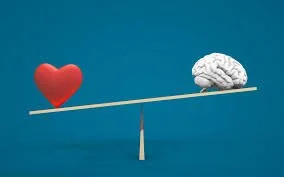
Have you ever sensed that something just wasn’t right with a tightness in your chest? Conversely, have you ever eyed a person with a love-at-first-sight feeling while experiencing stomach butterflies?
I think Suleika had it. Suleika Jaouad, a writer and motivational speaker, married Jon Batiste, a Grammy-winning, singer, composer, and instrumentalist in 2022. They had met as young teenagers at band camp, then parted ways. Four years later, as a Juilliard student, she was riding on a NYC bus with a friend. Both glanced at a guy wearing headphones, humming, and playing the air piano. Suleika recognized the guy and said to her friend, “That’s the man I’m going to marry.” They reconnected. And, turns out, she was right! Was it kismet, wishful thinking, or that gut feeling?
Surprisingly, gut feelings are not random and do not begin in one’s gut. Science suggests that there is a brain-gut connection. The gut or GI (gastrointestinal) tract is comprised of organs from the mouth to the anus, including the esophagus, stomach, small intestine, and large intestine (colon). Some refer to the gut or digestive system as the “second brain.”
The gut-brain axis (GBA) or superpower “sixth sense” has two connected parts of the nervous system: the central nervous system (CNS) of the brain and spinal cord, and the enteric nervous system (ENS) that protrudes into the gut tissue. There is a strong correlation between one’s emotional state and the gut microbiome that houses good and bad bacteria. Stressful, emotional experiences of anxiety and fear can register in the GI tract with stomach twinges, pain, or nausea. Many people experience goosebumps, prickling on the neck, stomach butterflies, sweaty palms, as well as feelings of safety, peace, and happiness—all after making ‘that gut feeling” decision.
For me, just thinking of the words “public speaking” gets my heart racing, or driving to an unfamiliar location makes my hands clamp down on the steering wheel. On a more lighthearted note, when watching a tender, romantic movie on television, my hands hurt. Go figure!
Involving personal safety, bodily or emotional reactions could signal a warning to stay alert or get out of a situation, fast. In personal relationships, it might be best to get to know a person beyond the first impression, with no rush job of tying the knot in Vegas. As in the above scenario, Suleika had previously encountered Jon Batiste; her brain likely was subtly retrieving data from her band camp experience with him.
The subconscious collects and stores data from past observations, experiences, and memories. It makes sense that the more data in one’s brain, the more expertise a person has, the easier it is to make confident, snap judgments. When decisions need to be quick, there is a wealth of data already catalogued in the brain to make that grounded, valid choice. People who practice this fast, intuitive decision-making are used by stock traders, basketball players, ER doctors, military commanders, and improv actors.
The US Navy teaches Marines and sailors to listen to their guts since instinct tends to outperform intellect in combat and other high-stakes situations. People identified as highly sensitive take in more data than 80% of the population who do not share this trait; they should trust their gut.
Intuition is valuable when:
· The timeline is short, and a split-second judgment is needed.
· A person has previous experience in the field and can take mental shortcuts.
· It can complement analytical thinking, and serves as a tie-breaker.
Intuition can be developed or enhanced. Ways to bolster gut feelings:
· Eat foods rich in fiber and fermentation; get adequate sleep, exercise, and hydration.
· Differentiate intuition from fear. Intuition is a “pulling,” positive, anticipated, calm, grounded energy vs. a “pushing,” tensive, panic energy.
· Start small to build confidence. Make low-stakes, last-minute decisions.
· Enjoy solitude in nature. Be quiet. Take a break from busyness. Trust the subtle.
“When making a decision of minor importance, I have always found it advantageous to consider all the pros and cons. In vital matters, however, such as the choice of a mate or a profession, the decision should come from the unconscious, from somewhere within ourselves. In the important decisions of personal life, we should be governed, I think, by the deep inner needs of our nature.” – Sigmund Freud, a conversation with Theodor Reik in the early 1930s.
Freud’s advice seems counterintuitive to me. I tend to rely on concrete, conscious research when making the big decisions. In the future, I will try to tap into my “sixth sense” more. Developing intuition takes time and practice by tuning into emotions and bodily cues. A good goal for all of us might be: Listen and learn when to trust that gut feeling.
Bit by bit, that’s all she wrote…