250 Years Through Fifth-Grade Eyes
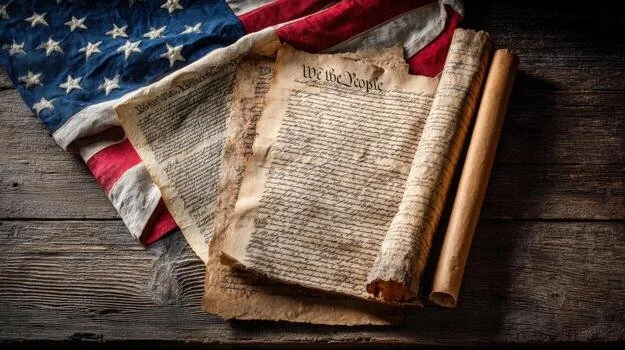
This past school semester, I volunteered in a fifth-grade classroom. I listened to the teacher tell the story of the Boston Tea Party. I heard words like Intolerable Acts, Sugar Act, and Taxation without Representation, and I realized that when I was in the fifth grade, my mind was elsewhere! Did I learn about these events that tell the formation of our country? Did I care about these acts of oppression set upon the colonies, and consider why? As far as memory serves, the answer to both questions is no. Let’s give my teachers the benefit of the doubt and say they taught me the information.
I later walked around the outside of the school from student to student, each standing in front of their handmade poster of information about one person from the era they were studying. This was a Living Museum of eleven-year-olds, in costume, portraying characters from the Revolutionary War. Most of the students were very engaged, because who doesn’t love dressing up! Each performer gave a short speech detailing their notable figures. I am not sure the actors understood the impact of their history makers, but that’s all right. Some day in high school, as they continue their studies, I hope they get it.
The enactments centered on whether George Washington was married, with the accomplishment of Founding Father and 1st President coming in second place. The number of children was also a big deal to the fifth graders. John Adams had six, and oh, by the way, he was a Massachusetts delegate to the Continental Congress and became a leader of the revolution. He helped in drafting the Declaration of Independence in 1776. Did you know Paul Revere didn’t even ride his own horse? He borrowed it! The treason of Benedict Arnold was a big topic, even though questions revealed the actor had no idea what treasonous act he had committed or what treason meant.
There were few women for the girls to portray, but my favorite was Mercy Otis Warren. The student dressed as Mercy loved writing and was intrigued by the influence words could create. I was drawn to her enthusiasm. Another clever and mischievous student informed me that Sarah Fulton suggested the patriots disguise themselves as Native Americans for the Boston Tea Party’s act of defiance. Then I met a brave revolutionary, Deborah Sampson, who dressed and fought as a soldier in the Continental Army. She was portrayed by a wisp of a girl who I can’t imagine having the courage to stand up to anyone. Perhaps she will channel Deborah in her adult life!
There were so many virtues on display during and after the Revolutionary War that created our country. Courage and bravery in battle to begin. Wisdom and creativity to write the Declaration. Persistence and honesty were necessary, and I suspect, great diplomacy, too. Understanding the strategy of war as well as the strategy of peace. These are but a few of the virtues needed for the noble experiment of freedom and equality, and I so hope these students understand these values as they mature and become adults.
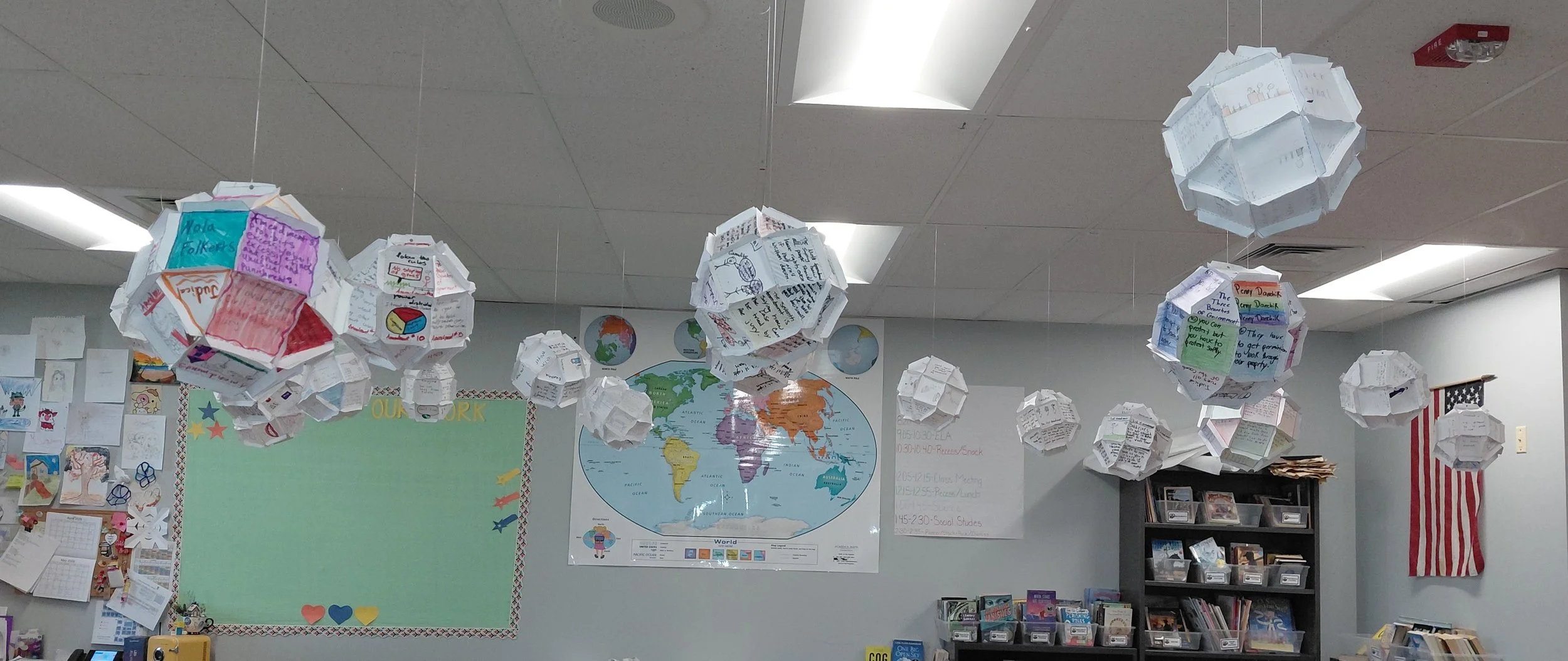
Later in the semester, each class member made a rhombidodecahedron (a 42-sided paper orb) designed to help them learn about the Bill of Rights. There was space for the first ten amendments of the Constitution, the three branches of government, and creative pictures. The craft was a wonderful refresher for me on the way the federal government shared governance with states and individuals. It’s the cornerstone of our country, the balance of power that keeps our country stable. As I hung their completed orbs, strung with fishing line, from the public school classroom ceiling, I was filled with gratitude for the opportunity to live in a country based on these core freedoms. And I was hopeful. Reading each amendment 28 times had an impact on me.
Do you need a refresher? Check out this link.
The Bill of Rights: What Does it Say? | National Archives
Little did these young learners know how often these ten freedoms would be mentioned in their adult lives. The importance and relevance of these documents are easily lost on many adults, so I try to understand the lack of seriousness in their comprehension of the paramount information. Perhaps someday they will see the real words written 250 years ago and feel the weight.
But, alas, there was a restlessness in the students, and I feared they didn’t get it - or care. It was their last big project of elementary school, and they were ready to be middle schoolers! Freedom was recess, summer break, and no homework. Ah, to be eleven again!
Children see the world through a narrow lens with very little on which to base independence, revolution, and the birth of a country. But these same young tweens will play their role in future history, so they must begin to learn about the events that created their corner of the world. Soon enough, they will learn how the past repeats itself if they are not taught.
May you all enjoy your Independence Day celebration and take a few moments of reflection on what it means to you to live in this great country.
Bit by bit, that’s all she wrote…