Who’s Got Your Back?
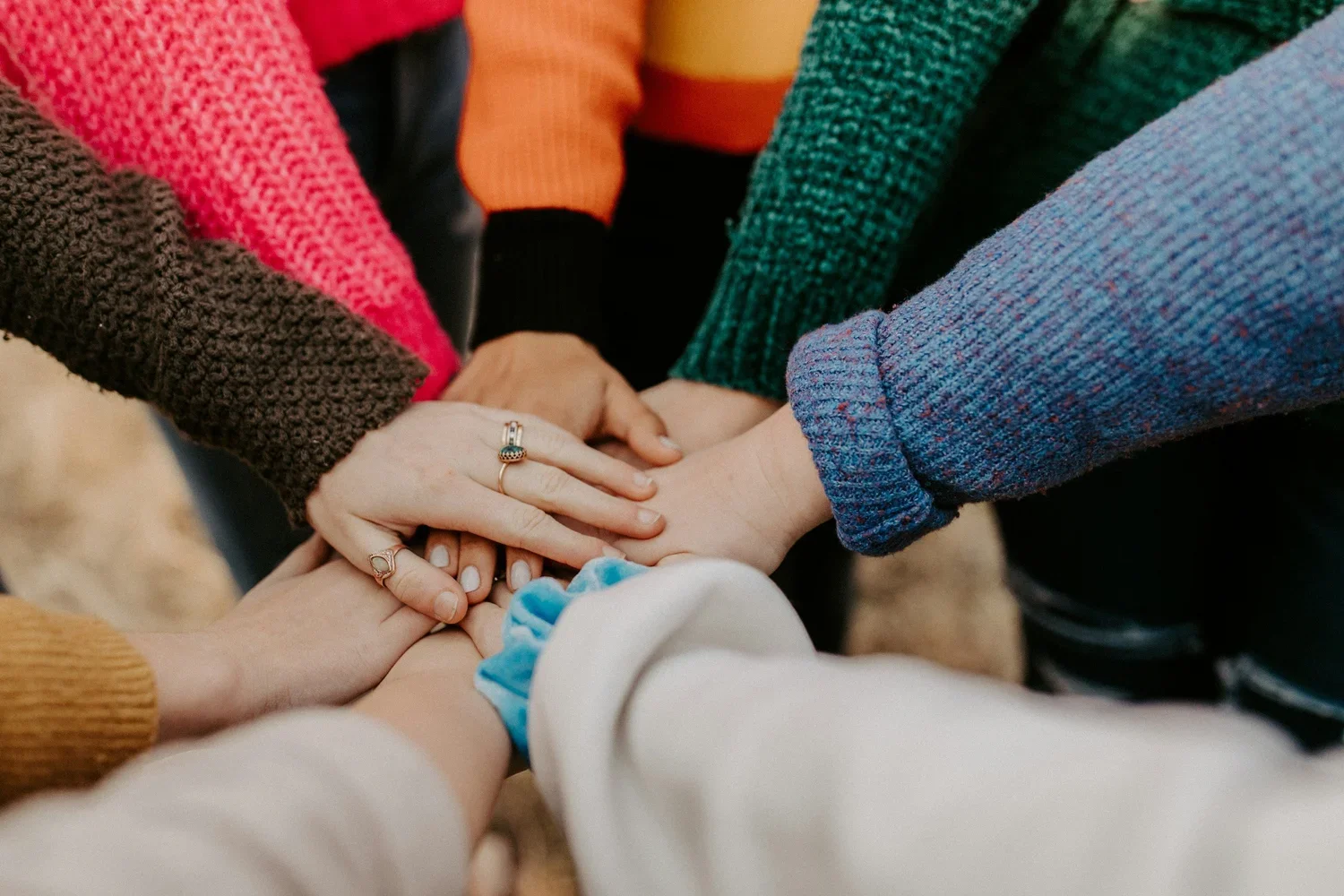
Do you have a strong support system? You should.
A support system is a network of people providing and receiving practical, emotional, mental, physical, and spiritual support.
Everyone needs a support system regardless of age, personality, or lifestyle. Whether it’s family, friends, co-workers, or like-minded people, we must cultivate connections to help our overall health. A support system can reduce stress and anxiety while enhancing our daily activities and lives.
Each stage in life brings opportunities for connections. Our growing-up years give us school with classes, clubs, and extracurricular activities. We form groups with similar interests, like the chess club, theater, and soccer. Friday night football games bring players, students, family, and community together. After high school, we go to college, a trade school, and employment, all opportunities for furthering a good support structure of people for camaraderie, encouragement, and help.
Those who start families and new jobs network with others in similar situations, organize children’s play groups and work softball leagues or attend business conferences and Sunday church services—all gatherings to reinforce that we are part of a fun, mentally stimulating, and supportive community.
Women are the masterminds of networking. We join, organize, play, and engage in book clubs, bridge, pickleball, and a myriad of classes like cooking, knitting, and yoga. Are women social because we are open, verbal, and inviting? Many men seem to bond over sports, whether playing or watching. Does that philosophical question of nature versus nurture apply to the development of our support systems?
Even for those who have fostered a robust support system, it can be challenging to maintain and make connections when retired. Our children have grown and moved out; we no longer have co-workers. We have to try to connect through other ways like volunteering, sharing an interest with like-minded people, or touring with fellow travelers. We need to be more intentional and proactive in giving to and seeking out others.
My husband has always been the fixer in our house. Being very mechanical, he’s our go-to guy when things need to be repaired. Before retirement, he didn’t have friends with whom he hung out after work or on the weekends. He didn’t play tennis or bond with guys over football and was a bit of a loner. After retiring, he started buying a couple of antique clocks that needed repair work to keep him busy and productive. He connected with a local clock shop and went to the store every Saturday to meet with buyers, sellers, and clock lovers like himself. They spent the whole day over donuts, pizza, and clock-shop talk. I was so proud of him; he found his own support group. Although his hobby has consumed our basement with more clocks than I can count, he has found his people over a like interest.
Why is a support system so important? Strong connections can be good for our health—physically, intellectually, emotionally, and spiritually. We all can benefit from a boost of serotonin and dopamine, the happy, calm, motivating, and mood regulators. They are energized through positive interactions with others. We need people for a particular skill or expertise, helpers like a plumber, doctor, or teacher, but we, also, need people who offer friendship, trust, encouragement, and love. We can combine our independence and self-sufficiency with vulnerable care for ourselves and others by getting and giving this needed and well-deserved support.
Over the years, I have been fortunate to preserve close friendships from high school to college, work, interest groups, and volunteering. Mulling over a few connections from a 20-year-old book club, lifelong friends near and far, and traveling buddies, my support system has enhanced my well-being. I have always gravitated toward a win-win scenario, such as the reciprocity of a give-and-take support system. The best of both worlds!
As Barbra Streisand sings in “People,”
“People
People who need people are the luckiest people in the world.”
From one Barbara to another (Barbra), I am one lucky person!
Bit by bit, that’s all she wrote…