The Demise of the Copper
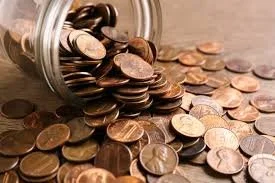
A nickel for your thoughts. It doesn’t sound right, does it?
I grew up with penny loafers, Pennies from Heaven, an old tune by Bing Crosby, penny gumball machines, and the saying, “Find a penny, pick it up, all day long you’ll have good luck.” Also, remember when our children or grandchildren celebrated the 100th day of the school year? Many kiddos displayed their counts with posters of one hundred pennies. A penny brings a bit of wistful nostalgia.
The U.S. one-cent coin was minted from the Philadelphia Mint in 1793. It was a large, pure copper coin, featuring a “Flowing Hair” Miss Liberty, initially designed by artists like Benjamin Franklin. In 1909, it transitioned to the Lincoln cent, commemorating the 100th anniversary of his birth. It now features the Union Shield on the back, and after six transitions from pure copper, in 1982, it is now 97.5% zinc plated and 2.5% copper. In 2024, a cent cost 3.7 cents to produce. The U.S. Mint last produced the penny for general circulation on November 12, 2025. RIP. There are roughly 114 billion pennies in circulation and will hopefully remain legal tender for a long while.
In the future, will people eventually show confusion with, “What’s a penny?” This little round disc is abundant in saying and song. Examples:
Sayings
A penny saved is a penny earned. (inspires saving money)
It costs a pretty penny. (expensive)
Worth every penny. (valuable)
To pinch pennies. (encourages frugality)
Songs
Penny Lane - The Beatles (street in Liverpool, 1967)
Penny Lover – Lionel Richie (1983)
Throw a Penny – Bee Gees (1974)
Penny and Me – Hanson (2004)
I feel somewhat scammed, frustrated, and downright sad with this recent ruling to eliminate production of the ubiquitous little copper. Some women of my generation still carry a coin purse or at least have a jar full of loose change, sprinkled with pennies. With the penny going away, who decides the standard for the rounding up or down from the nickel? Will it be a federal decision for national consistency or will each state decide how and when the transition will be handled? What do retailers do? So, besides overcoming sentiment and tradition, here is the rub…
· Rounding Issue: If the final cost of an item (before or after a tax?) is $25.17, does the retailer round up or down to the nearest nickel? Currently, there is discussion of a term called “symmetrical rounding.” If the final price ends in 1, 2, 6, 7, payment rounds down to the lower nickel; or, if the final price ends in 3, 4, 8, 9, then the payment rounds up to the nearest nickel.
· Nickel Demand: There will be an increased demand for nickels, each now costing $.14 to produce (To reduce this cost, there might be a change in the composition from copper and nickel to zinc and nickel).
· Charity Impact: There could be a negative impact on charities that rely on small-change donations.
· Retail Logistics: Retailers will face logistical issues of updating point of sale (POS) systems and training staff on rounding procedures.
Coin collectors often hunt for that rare cent. In 2015, the 1792 Birch Cent, an experimental U.S. penny by engraver, Robert Birch, sold at auction for over $2.5 million. It makes you want to scrounge through your penny jar, doesn’t it? Often, the limited coins have had an error in minting, thus the rarity and exorbitant value.
The farewell to the shiny copper is all in the name of progress. Right? Penny candy and the penny arcade have gone by the wayside, so why not the actual penny? But, there’s a glimmer of hope “to save the penny.” Recently, a friend announced the birth of her first granddaughter, Penelope (Penny for short)! At least the name lives on.
Bit by bit, that’s all she wrote…