Game’s On!
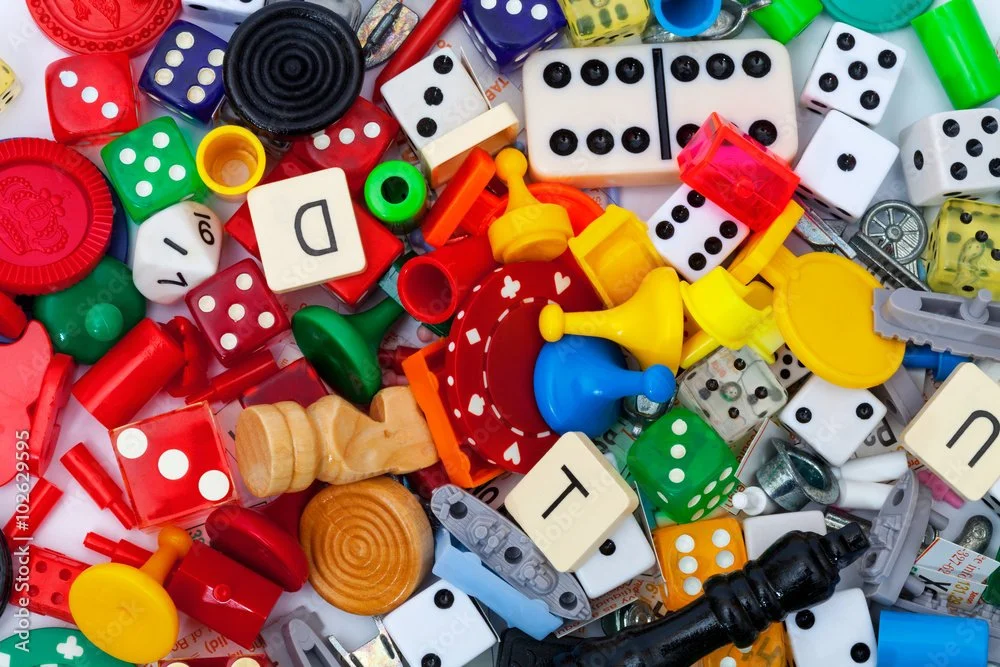
Are you a fan of games? Many Americans like to participate in or watch a rousing game of football, tennis, basketball, hockey, or soccer. Often, friends and family bond over time spent rooting for their favorite sports teams and players. Go Broncos!
During high school years, I attended many football, wrestling, and basketball games. In our household, watching the PGA and NFL sports on television was a given on most Sundays. My dad was an avid golfer, and my mom was in a bowling league. Before the 1970s, in my hometown, HS girls’ sports were limited to cheerleading and twirling majorettes’ batons.
In 1972, Congress passed the Title IX civil rights law, prohibiting sex-based discrimination in any school or educational program that received federal funding. This means today’s sports are much more expansive and inclusive. Three cheers!
So, my game preferences are a bit more subdued and sedentary, but just as heartfelt as for the love of physical sports. It might be a stretch, but could there be a correlation between physical sports and games with boards, cards, dice, marbles, and tiles? Both enhance and develop the competitive skills of team cooperation, recall, deduction, and strategy.
How many of us, our children, and grandchildren started playing Candyland, GoFish, and Old Maid (To be PC now, it’s Mermaid.), then progressed to Monopoly, Gin Rummy, and poker? We had to learn how to follow the rules, take turns, grasp disappointment, cheer on the winner, and console the loser. Be a good sport in game and in life. Then, patterned after the Jeopardy television show that began in 1964, Trivial Pursuit challenged our memory. Is it still around, and has it been updated with decades of facts since the 80s? (I don’t recall.) Bridge clubs had their heyday from 1930 through the 1960s, with partners bidding and getting tricks to win. There is now a resurgence of bridge with groups popping up online and in communities. Let the melding (bridge term) begin!
Deduction in physical sports might involve assessing tactics, flow, options, and positioning by coaches and team players. Clue speculates all the angles and possibilities to determine “whodunit,” where it took place, and with what weapon. Was it Mr. Green, in the study, with the rope?
Strategy is strengthened through sports and in table games. Like face-to-face in athletic play, in checkers, red and black chips move in opposite directions, bluffing and second-guessing their opponents to score a win. Mancala, Pente, and backgammon all hone strategic skill. The ultimate strategy game, though, was invented around the 6th century in India. Any guesses? We recently experienced a fun, family vacation in South Carolina. Amid all the noise and chaos, it made me smile to see my daughter and her husband quietly engrossed in a good game of chess.
When I was 10 years old, our family spent a week’s vacation in Florida. I have a vivid memory of my dad on his beach chair, teaching me the card game, Cribbage, with two players using a unique wooden board of holes and pegs for scoring. It was just the two of us spending quality time in friendly competition over a game of cards while soaking up the sun’s rays. Do people do this anymore? Yes, my family does. At our South Carolina get-together, we played the card game, Five Crowns, and the dice game, Farkle, with laughs galore. I think every family gathering should have cards and board games on hand.
Games with tiles, marbles, or dice bring people together. When I think of my mom, I think of Scrabble. We would sit on the sofa with the unfolded board on a cushion between us. Being equally competitive, we could spend hours in thought and conversation. My in-laws and their grandchildren would often play dominoes, while I listened to their sweet interchanges of conversation and the click-clack of the rectangular slabs. And, who fondly remembers throwing those five noisy dice in Yahtzee?
Currently, I am learning to play Mahjong, which sharpens my mind. I love the feel of the smooth tiles and the camaraderie. Often, when we forget a rule or some play etiquette, we make up our own and still have fun. We are not serious competitors.
Games can strengthen our competitive skills of team cooperation, recall, deduction, and strategy, but the fun and connection with others take the winning trophy. So, stop looking at your screens. Clear the kitchen table and grab some friends or family members for a fun, face-to-face game of cards. Better yet, dust off one of your board games and dive in.
Do you play games with family and friends? Which ones are your favorites?
Bit by bit, that’s all she wrote…